
Replacing roofs with lots of angles
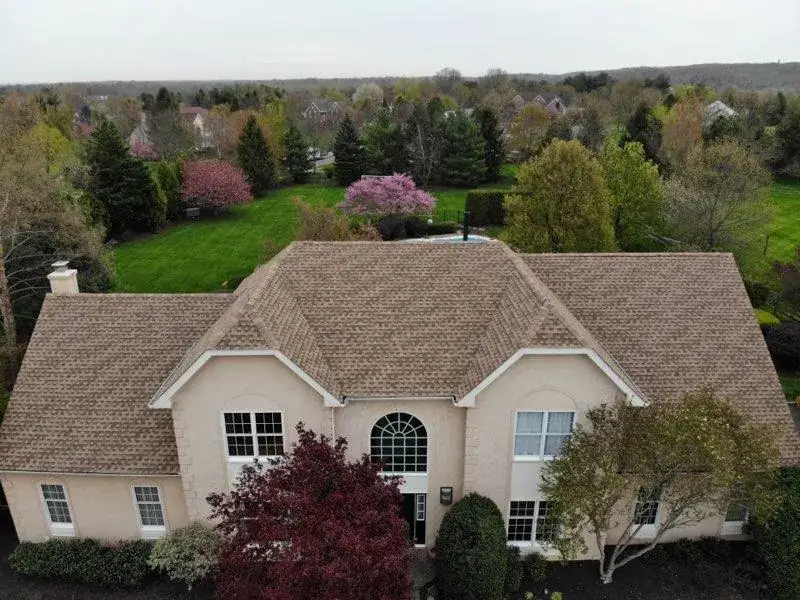
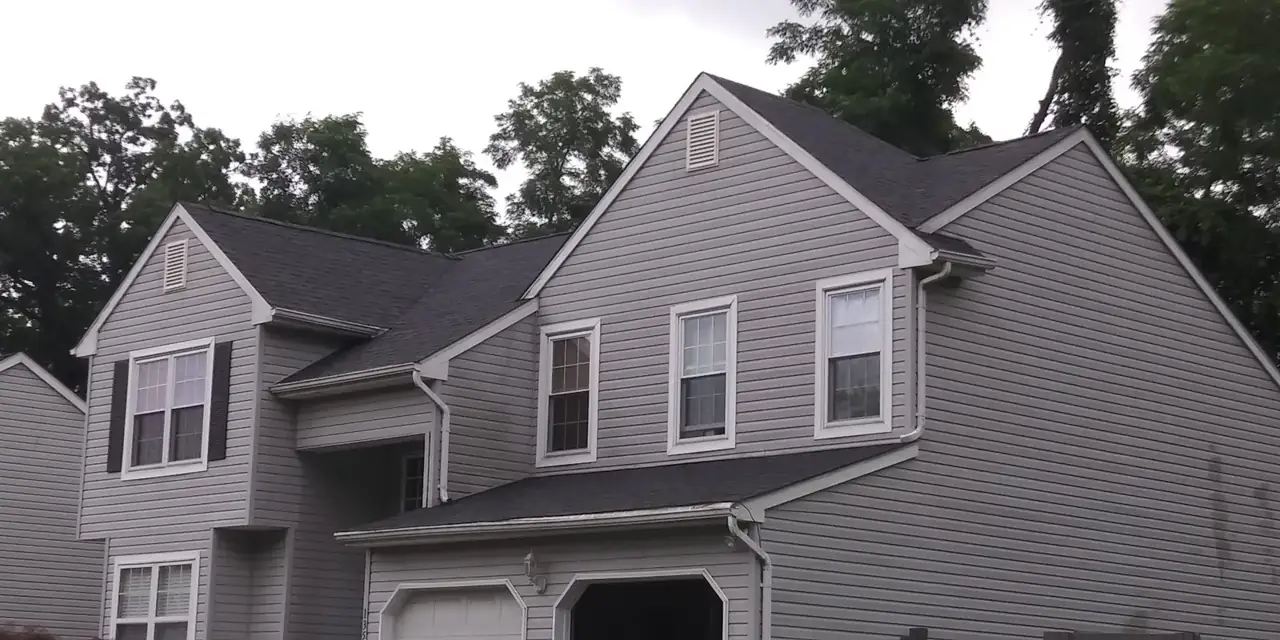
Kingston grew as the residential side of the river, and many of its bigger older homes, especially along Wyoming Avenue and near Wyoming Seminary, were built with steep main roofs, several gables and tall brick chimneys. A roof like that has far more valleys, wall joints and flashing details than a simple two-slope ranch, and each one is a place where water can get in.
So on a Kingston replacement, the details get as much attention as the field shingles:
- Every valley gets ice and water barrier down its full length, not just at the eaves. Valleys carry the most water and hold the most ice.
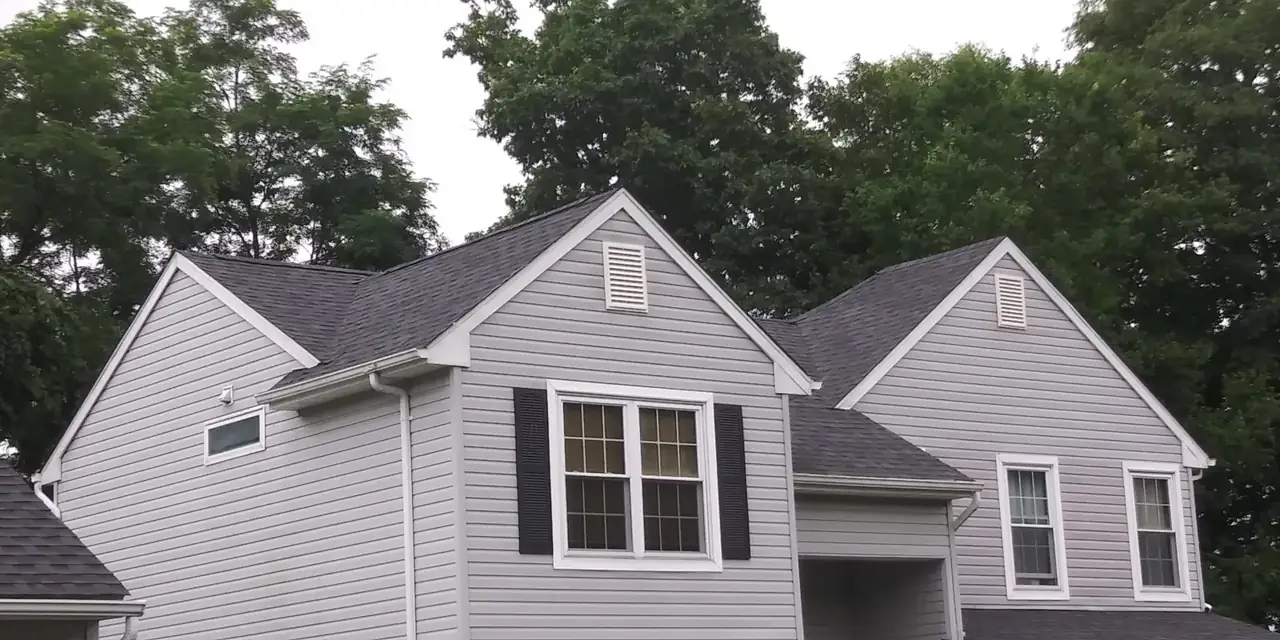
- Each gable wall and dormer cheek gets new step flashing woven into the shingle courses.
- Chimneys get step flashing plus counter-flashing set into the mortar joints. On older Kingston houses, we often remove years of tar that was smeared over the original metal.
- Architectural asphalt shingles go on from a GAF-certified crew, with matching ridge cap and algae-resistant options for the shaded slopes.
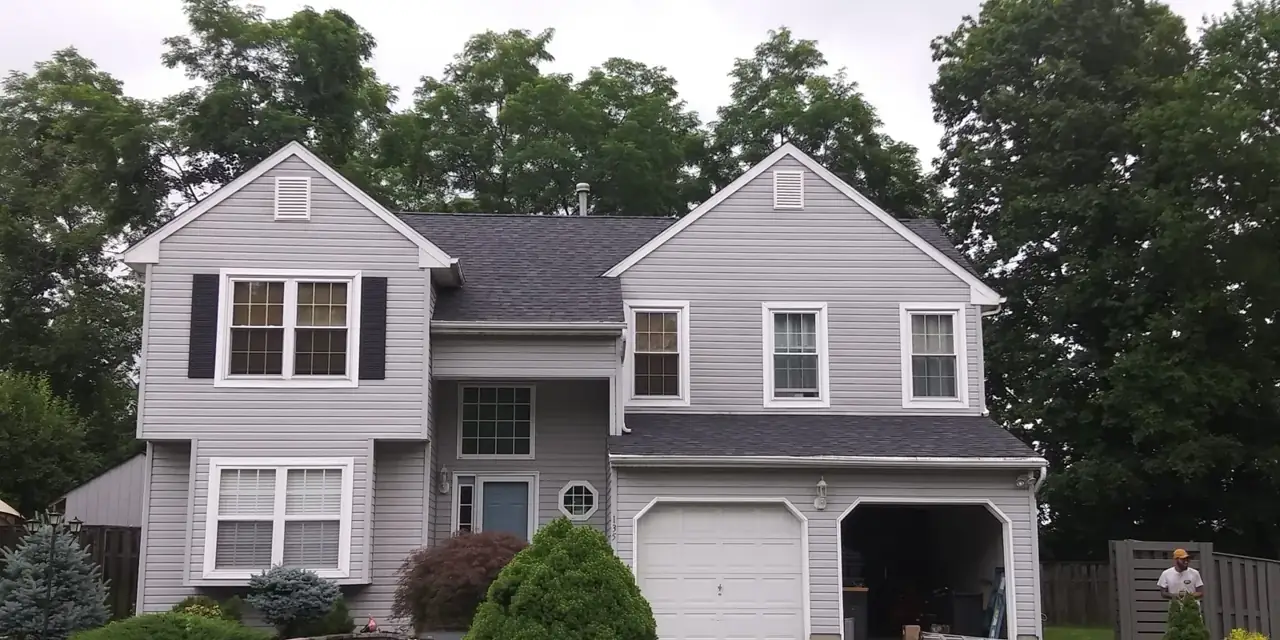
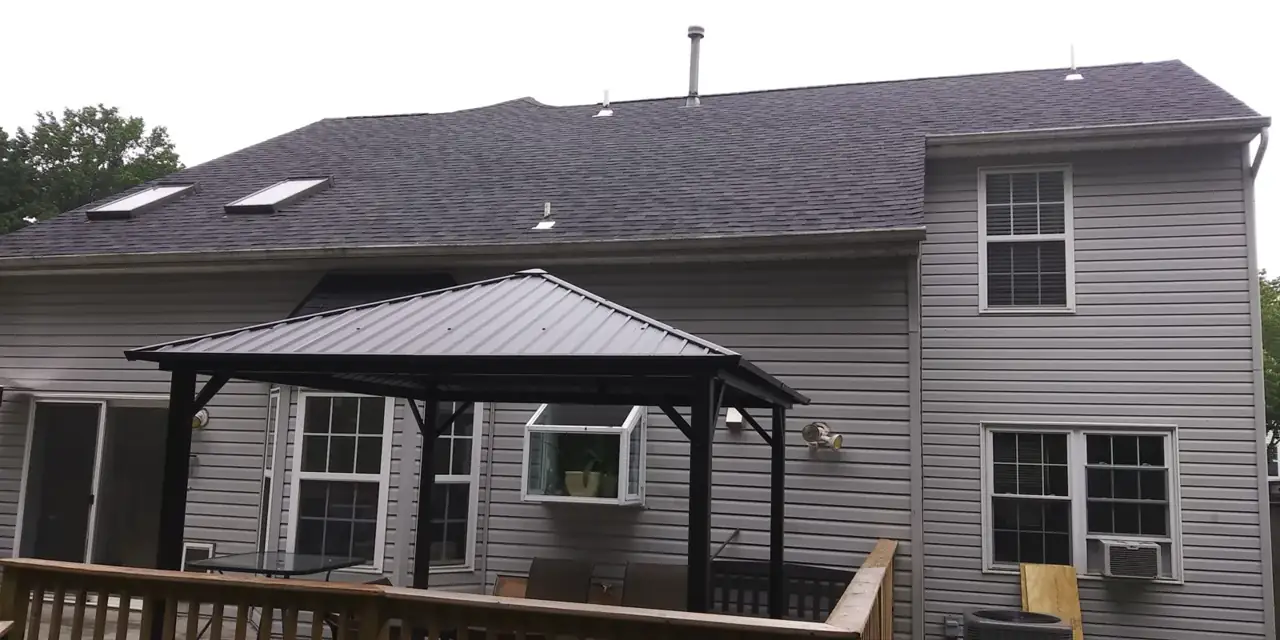
The modest two-story homes on the side streets are simpler, but they often have their own quirk: an enclosed porch or back addition with a low-slope roof. We cover those sections in EPDM rubber during the same job, since shingles aren't made for that pitch.
The attic matters as much as the shingles
A lot of Kingston's bigger older houses have living space right up under the roof, whether it's a finished third floor or rooms tucked behind knee walls, and very little venting. In winter, that trapped heat melts snow near the ridge, and it refreezes at the eaves as an ice dam. The rest of the year, trapped moisture from the house condenses on the underside of the deck. After enough years, the sheathing goes soft from below even though the shingles above look fine.
That's why a Kingston replacement always includes a look at the attic. Where we can, we balance intake at the eaves with exhaust at the ridge. Where a knee-wall or finished space makes that harder, we explain the options before the job starts. Our roof ventilation page covers how that works.
Moisture from the river is the other half of the story. Kingston sits on the western bank of the Susquehanna, behind the Wyoming Valley levee system, and fog and damp air keep shaded roofs wet. Once the old roof is off, we check the deck board by board. That's especially important on homes that carry reminders of the 1972 Agnes flood, and we replace anything soft before new underlayment goes down.
Tight lots, borough permits and scheduling
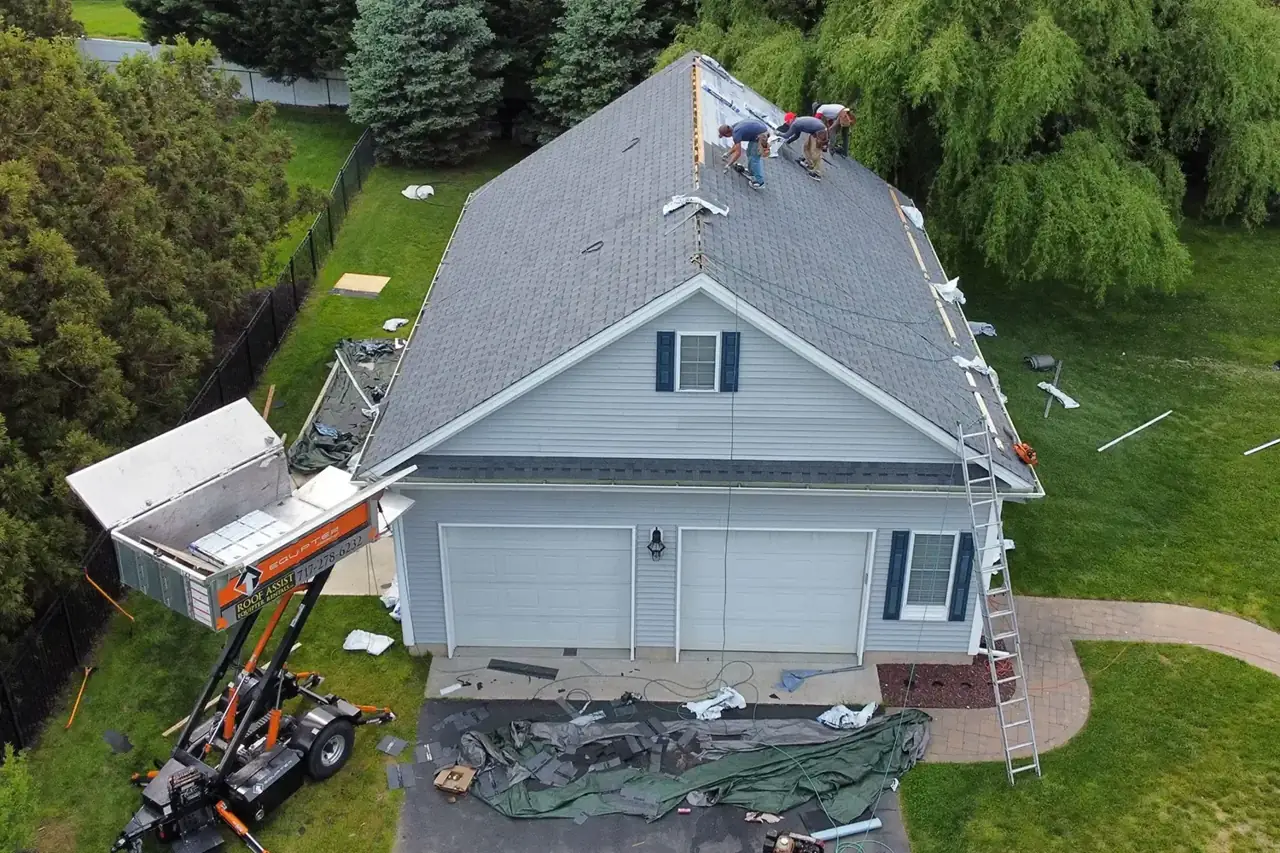
Kingston lots are often narrow, with shared driveways and not much side yard. We walk the property before the job to pick a dumpster spot, sometimes a smaller container or a street placement, and to plan where ladders and materials go. We protect your neighbor's side as well as yours, and we let them know what's happening when a driveway is shared.
In the borough, the Municipality of Kingston's zoning and permits office is where roofing applications go, and it accepts them directly. With some residential repair work exempt under the state UCC, the answer for a re-roof depends on the borough's rules and how much work is involved. We get that answer for your address, and when a permit is required, we file it and book the inspection.
Our Plymouth office is next door, so a Kingston job is one of our shortest drives. Not sure you need a full roof? Ask us about a roof repair first. You can read more about our roof replacement system, or get a starting number from the Instant Roof Quote.
More detail on how we handle this work anywhere we serve: Roof Replacement. Everything we do in Kingston: roofing in Kingston, PA.