
Chimney leaks and the tar problem
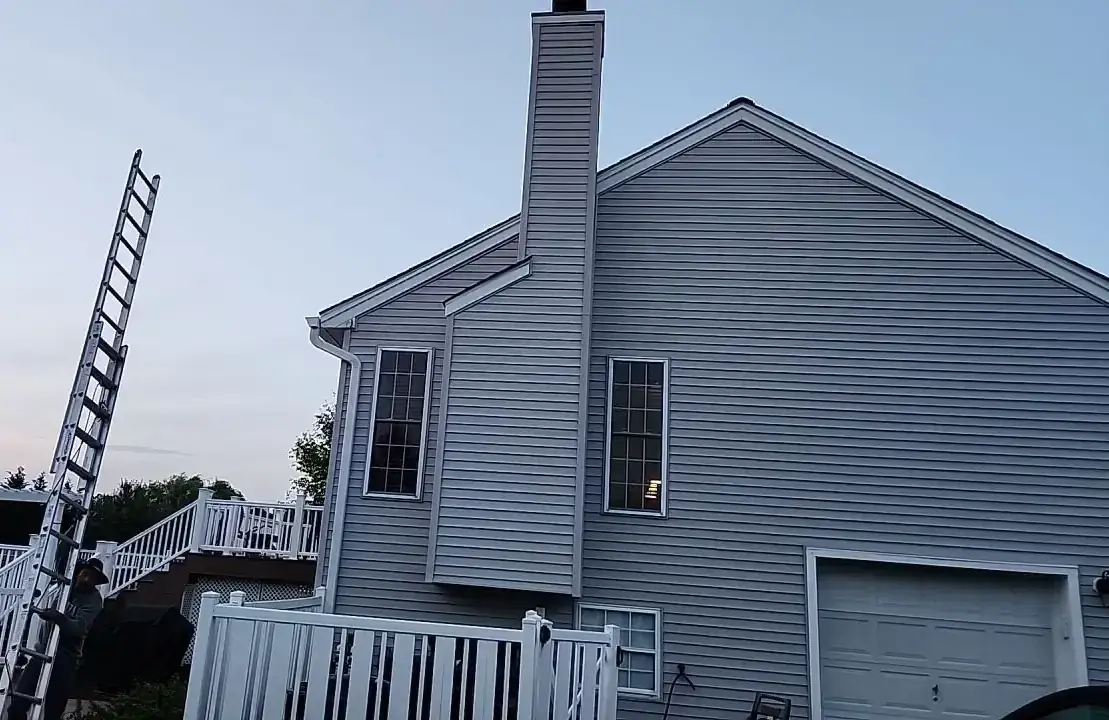
If we had to name the single most common leak on Kingston's older homes, it would be chimney flashing. The big brick chimneys on houses near Wyoming Avenue and Wyoming Seminary have outlasted several roofs, and at some point most of them were "fixed" with a thick coat of roofing tar over the joint. Tar looks watertight for a winter or two. Then it cracks with the cold, pulls away from the brick, and water runs down the chimney into the attic. The stain usually shows up on a ceiling or wall next to the chimney, sometimes a floor below.
A real repair means removing the tar and old metal, then installing new step flashing woven into the shingle courses and counter-flashing set into cut mortar joints. That way the roof and the chimney can move independently through freeze-thaw without opening a gap. If the chimney's crown is cracked or the mortar is crumbling, water can get in above the flashing too, so we point that out and photograph it.
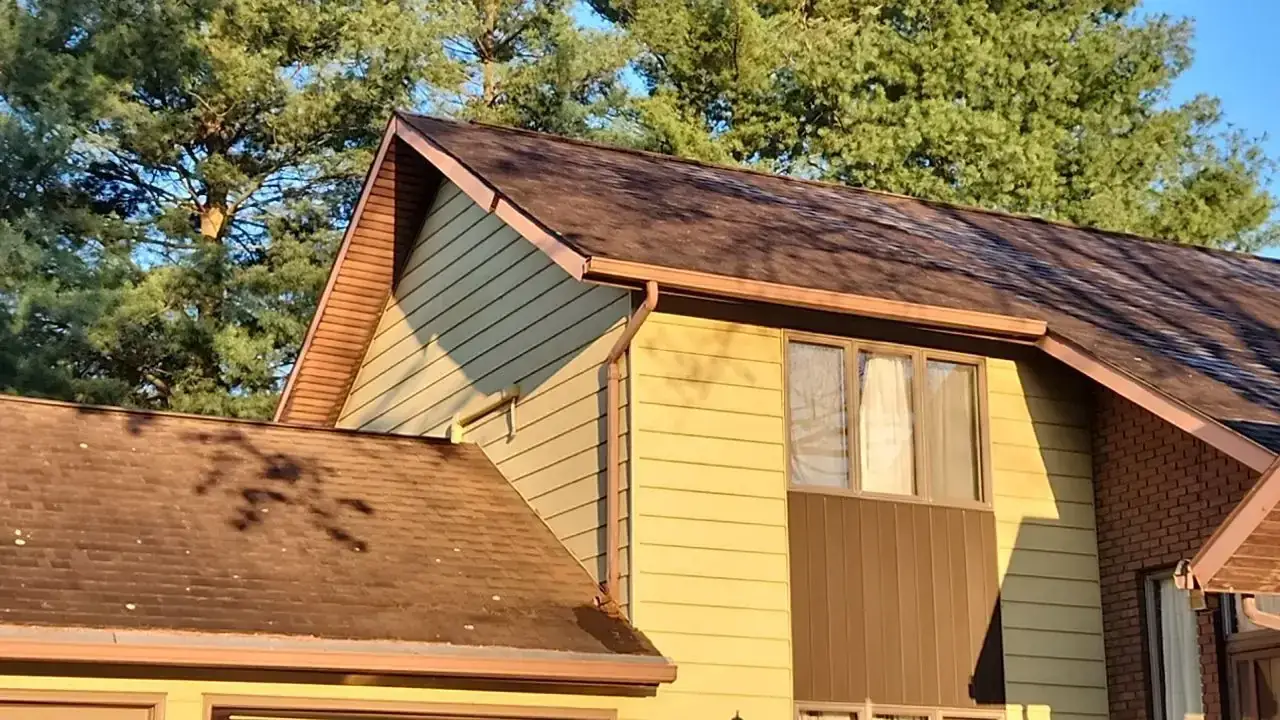
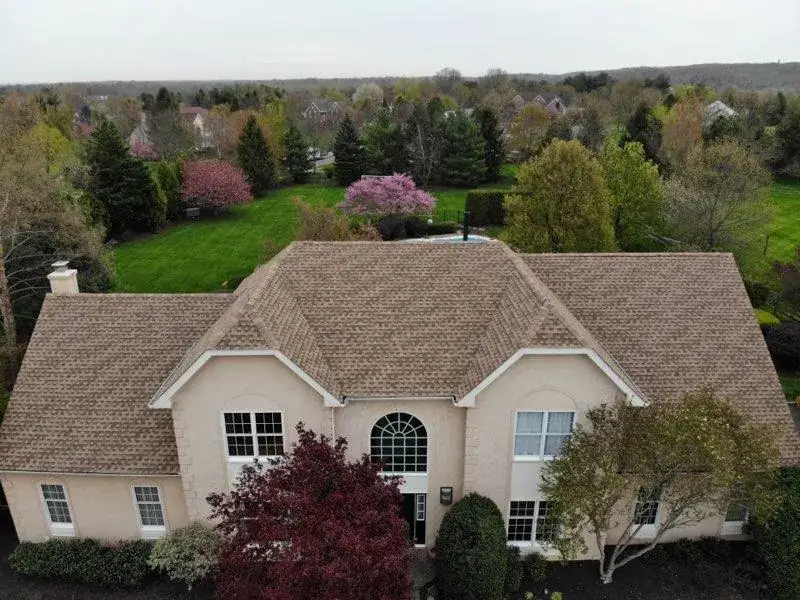
Valleys on Kingston's multi-gable roofs are the second big leak source. They carry the most water and hold ice longest, and a worn or poorly cut valley will leak long before the rest of the roof does. We can usually rebuild a valley without replacing the whole roof.
Porch roofs, moss and ice at the eaves
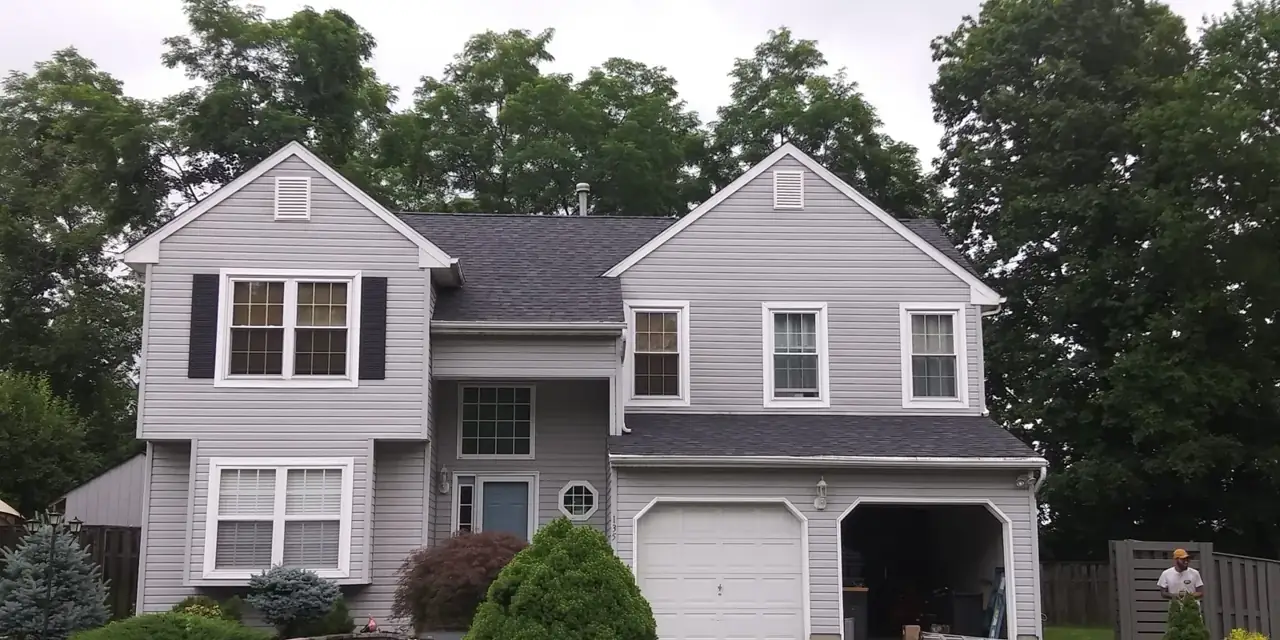
Many of the modest two-story homes on Kingston's side streets have an enclosed porch or back kitchen under a low-slope roof. Those sections are often the first place a leak starts, especially at the joint where the flat roof meets the main wall. When the old roll roofing is past saving, we replace just that section with EPDM rubber and install new flashing up the wall rather than reusing the old metal.
The river plays a part too. Kingston sits right on the Susquehanna, and between the valley fog and mature street trees, shaded slopes stay damp. Moss grows into the gaps between shingles, holds water there and slowly lifts the edges until wind-driven rain gets underneath. On a roof that's otherwise sound, we can repair the damaged shingles and deal with the moss. Please don't pressure-wash it, because that strips granules and shortens the roof's life.
In winter, ice dams cause a different kind of leak. Heat escaping from finished third floors and knee-wall attics melts snow high on the roof, it refreezes at the eave, and meltwater backs up under the shingles. We fix the damage at the eave, then tell you honestly whether better attic ventilation is needed to keep it from happening again. After wind or hail, we document the damage with photos and can meet your adjuster on site.
When repair stops making sense
A single leaking chimney, one worn valley or a few blown-off tabs on a roof with plenty of life left is a repair job, and that's what we'll recommend. If we find granule loss across every slope, soft deck in several places, or a roof that's already been patched half a dozen times, then another patch only delays the bigger bill. In that case we'll tell you a roof replacement makes more sense and show you the photos behind that advice.
For permits, Kingston uses the Municipality of Kingston's zoning and permits office, and applications go straight to the borough. Pennsylvania's UCC exempts some residential repair work, so we check what your particular repair requires, and if a permit is needed, we handle it.
Learn more on our roof repair page. If your roof is getting up in years, the Instant Roof Quote gives you a replacement number to compare against.
More detail on how we handle this work anywhere we serve: Roof Repair. Everything we do in Kingston: roofing in Kingston, PA.