
Common leaks on Ewing's mid-century homes
Many Ewing homes are on their second or third roof, and the leak calls we get follow a pattern. Most come from a handful of spots:
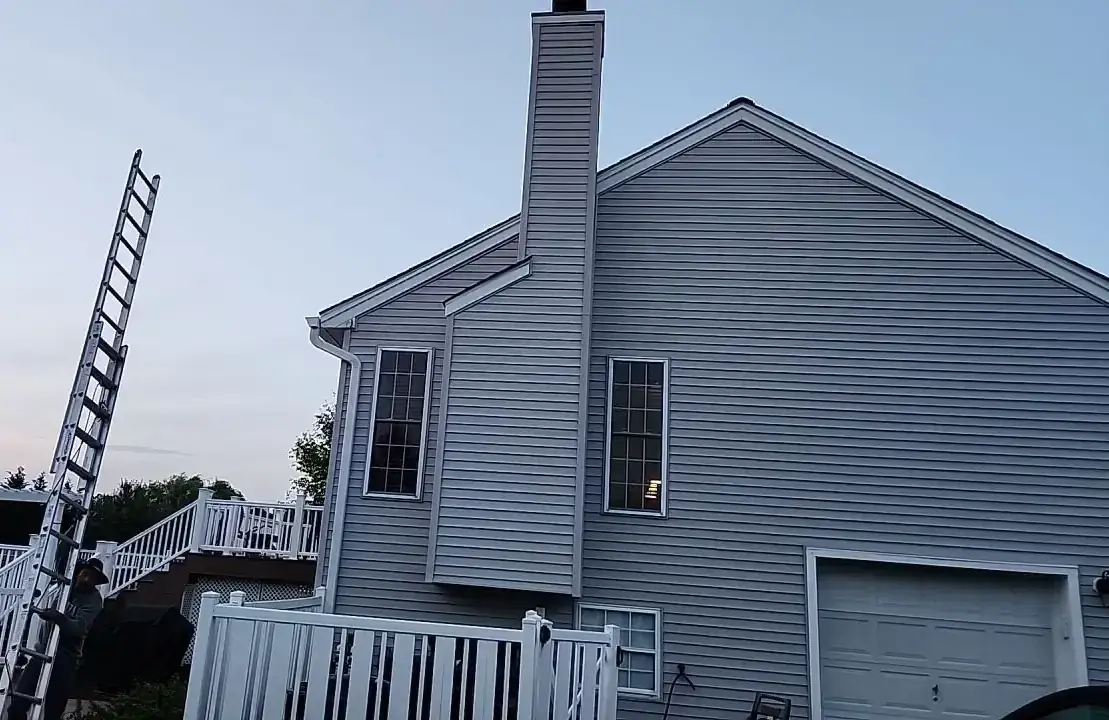
- Chimney flashing patched with tar. Over the years, a lot of chimneys got a coat of roofing cement instead of new flashing. It works for a season or two, then cracks and lets water run down behind the brick.
- Cracked pipe boots. The rubber collar around a plumbing vent dries out in the sun and splits, usually well before the shingles are worn out.
- Low-pitch slopes. On ranch roofs, wind-driven rain can creep uphill under the bottom edge of a shingle, especially where the seal strip has let go.
- Brittle shingles after a storm. Older shingles lose flexibility, and a strong summer gust can snap off tabs that a newer roof would shrug off.
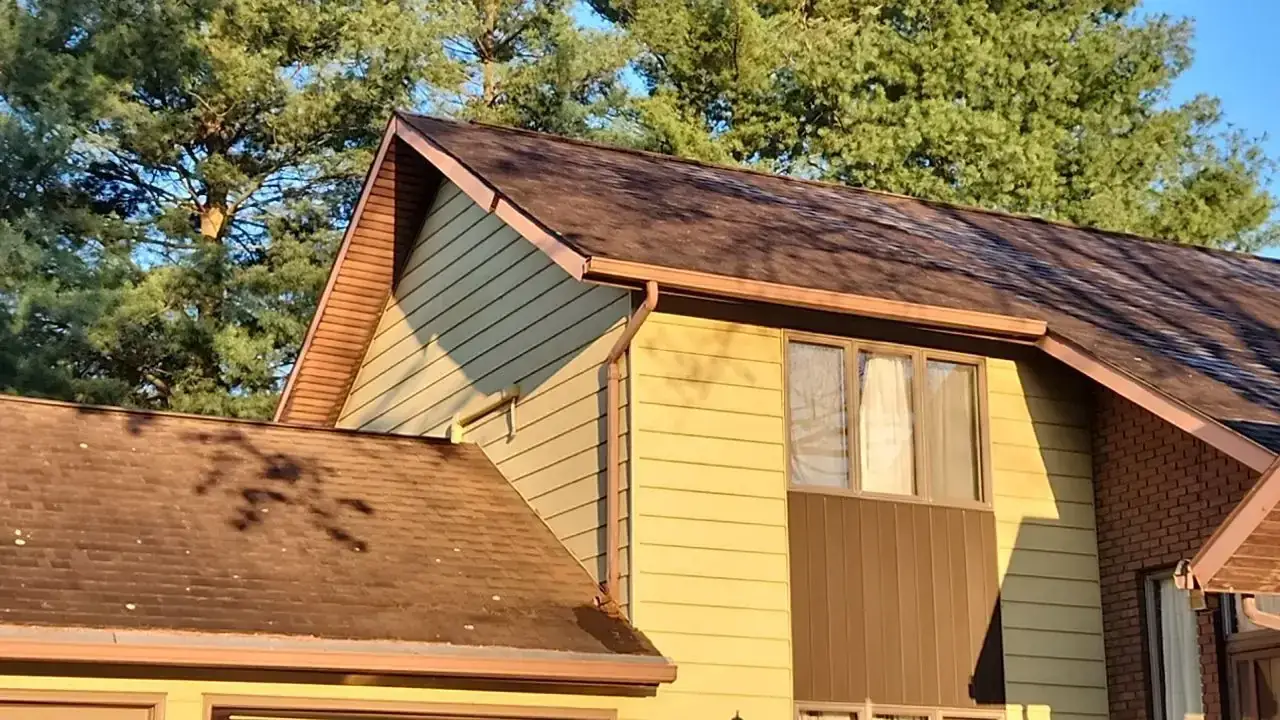
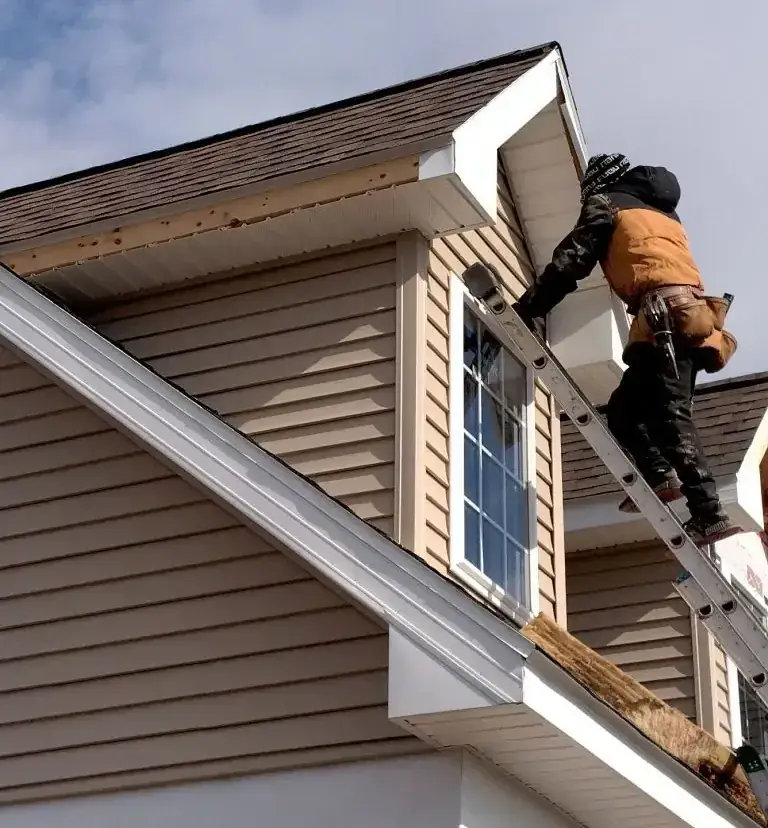
- Wall and dormer flashing on capes and split-levels.
We find the source first, then fix it, and we photograph both so you can see what failed and what we did about it.
Is it a leak, or is it the attic?
In Ewing's older houses, a surprising number of "leaks" turn out to be condensation. When a bathroom or kitchen fan vents into the attic, or the attic has little soffit intake, warm, moist air from the house hits the cold roof deck in winter and condenses. You may see frost on the nail tips, damp insulation and water spots on the ceiling on a dry, cold day. The roof may be perfectly sound.
Ice dams are the other winter culprit. When attic heat melts snow on the roof, the water refreezes at the eaves and backs up under the shingles. The stain shows up along an exterior wall or above a window, usually after a thaw.
We check the attic on every leak call where we can get in. If the problem is ventilation, patching shingles won't solve it, and we'll explain what will, whether that's running fan ducts outside or improving attic ventilation. If ice has damaged the eave shingles, we replace them and add ice and water barrier underneath.
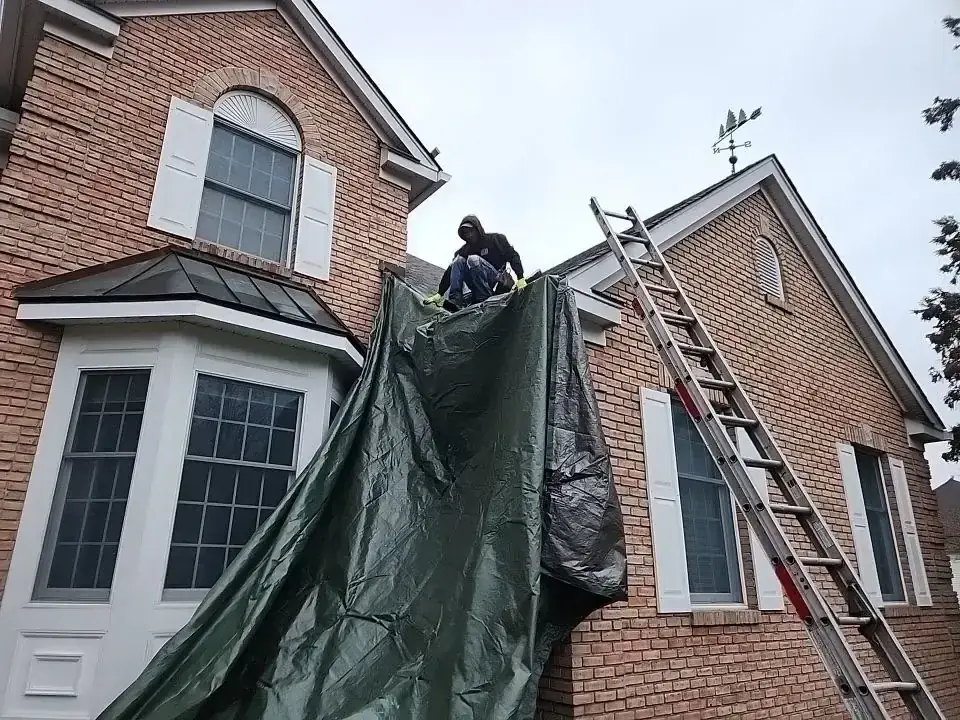
After a storm or a limb strike from one of Ewing's mature street trees, our storm damage repair work starts with photos and a temporary dry-in. We can also meet your adjuster on site.
Repair now, replace later, or replace now
We'd rather tell you a roof has years left than sell you one you don't need. A roof with plenty of life and a single problem spot, like a pipe boot, a chimney or a few blown-off tabs, gets a targeted repair. When the shingles are curling or bald across whole slopes, the deck feels soft underfoot or you've had three leaks in as many years, we'll show you the photos and walk you through a roof replacement instead.
There's a middle ground too. If a replacement is a year or two out, we can fix the active leak so it holds until you're ready, and tell you what to keep an eye on in the meantime.
Permits usually aren't part of a repair on a detached home. Re-roofing a detached one- or two-family home is ordinary maintenance under New Jersey's code, and small repairs are routine. On townhouses and condos, bigger roof work generally needs a permit from Ewing's Construction Office, and your association may have its own rules. When a permit is needed, we pull it.
Read how our roof repair visits work, and if you're weighing a new roof, the Instant Roof Quote gives you a quick ballpark.
More detail on how we handle this work anywhere we serve: Roof Repair. Everything we do in Ewing: roofing in Ewing, NJ.