
Where Hamilton roofs tend to let water in
Most of the leak calls we get from Hamilton aren't about worn-out shingles in the middle of a slope. They're about the details. The township's capes, ranches and split-levels from the 1950s and 60s share a few repeat offenders:
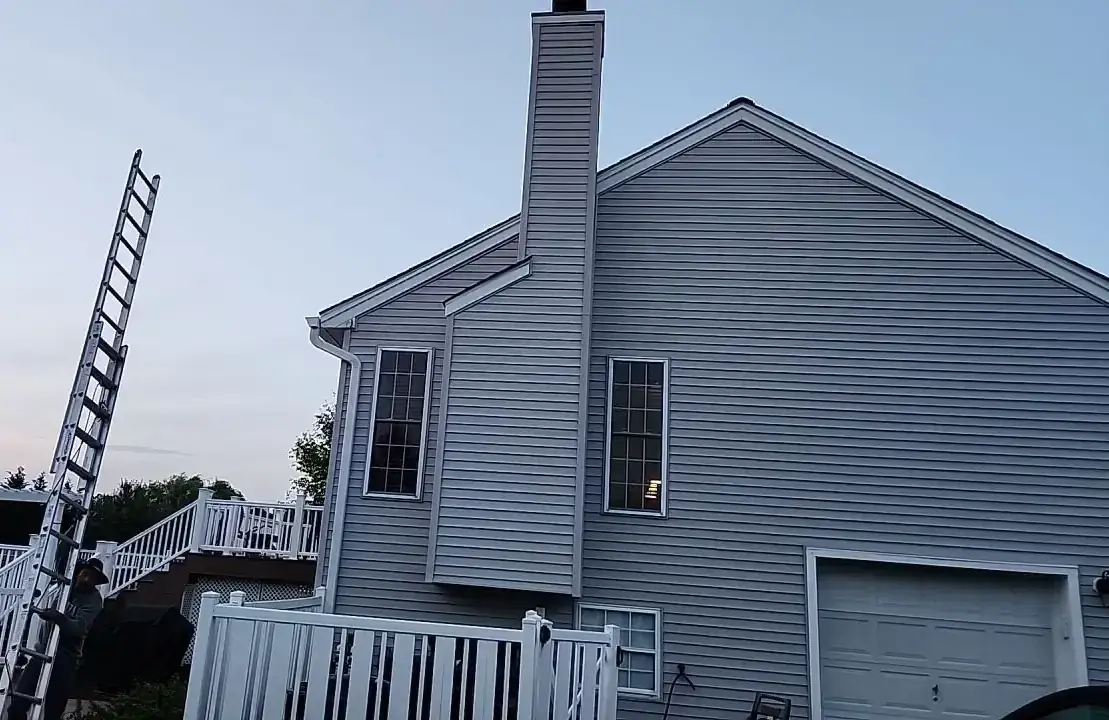
- Chimney flashing that was patched with roofing tar instead of rebuilt. Tar cracks after a few winters, and water runs down behind the brick.
- Pipe boots on plumbing vents. The rubber collar dries out and splits long before the shingles around it are done.
- Low-pitch rear slopes and porch roofs, where water moves slowly and wind can push it back uphill under the tabs.
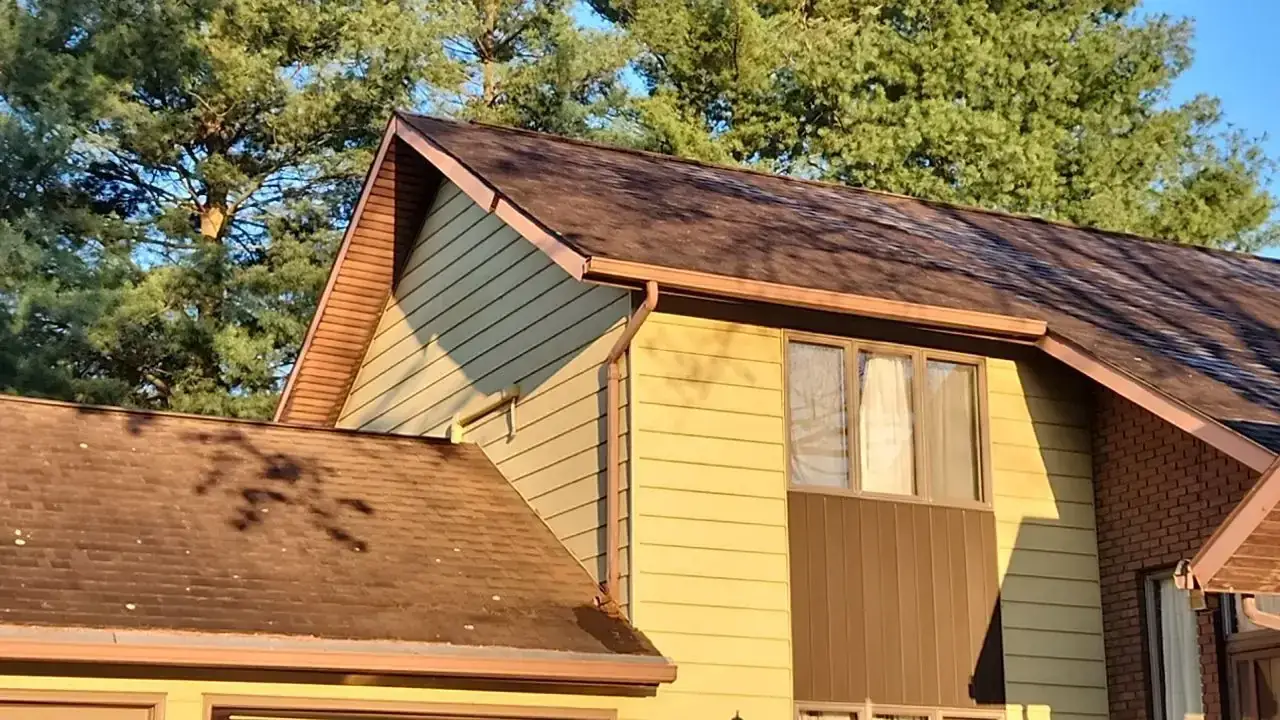
- Wall joints on split-levels, where a lower roof meets the siding of the upper floor.
One Hamilton quirk worth knowing: on many older houses the bathroom fan dumps warm, wet air into the attic. In January that moisture condenses on the underside of the roof deck and drips onto the insulation. It looks exactly like a leak from below. We check for it before we sell you a repair you don't need.
Ice dams, nor'easters and the stains that follow
Mercer County winters swing above and below freezing over and over, so snow on a Hamilton roof can melt and refreeze several times after one storm. When attic heat melts the snow higher up, the water refreezes at the cold overhang and backs up under the bottom courses of shingles. The stain usually shows up along an outside wall or at the top of a window, not in the middle of a ceiling.
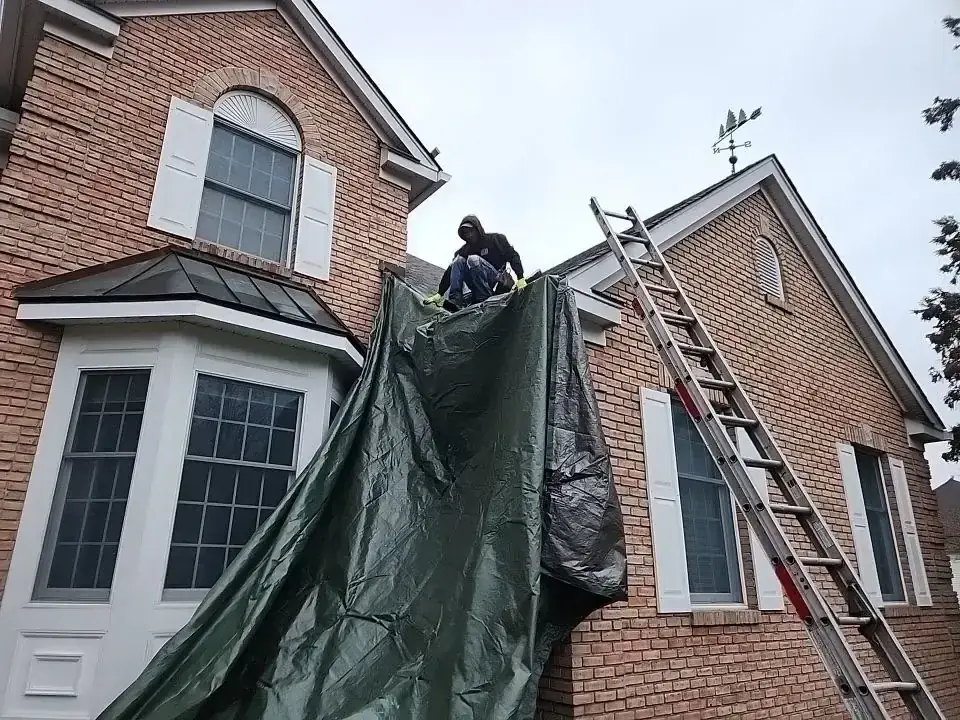
During the thaw, the right move is to keep water out without tearing into a frozen roof. Once the weather allows, the lasting repair is to replace damaged shingles and underlayment at the eaves, add ice and water barrier there, and look hard at why the attic is warm enough to melt snow in the first place. Often that means a ventilation fix.
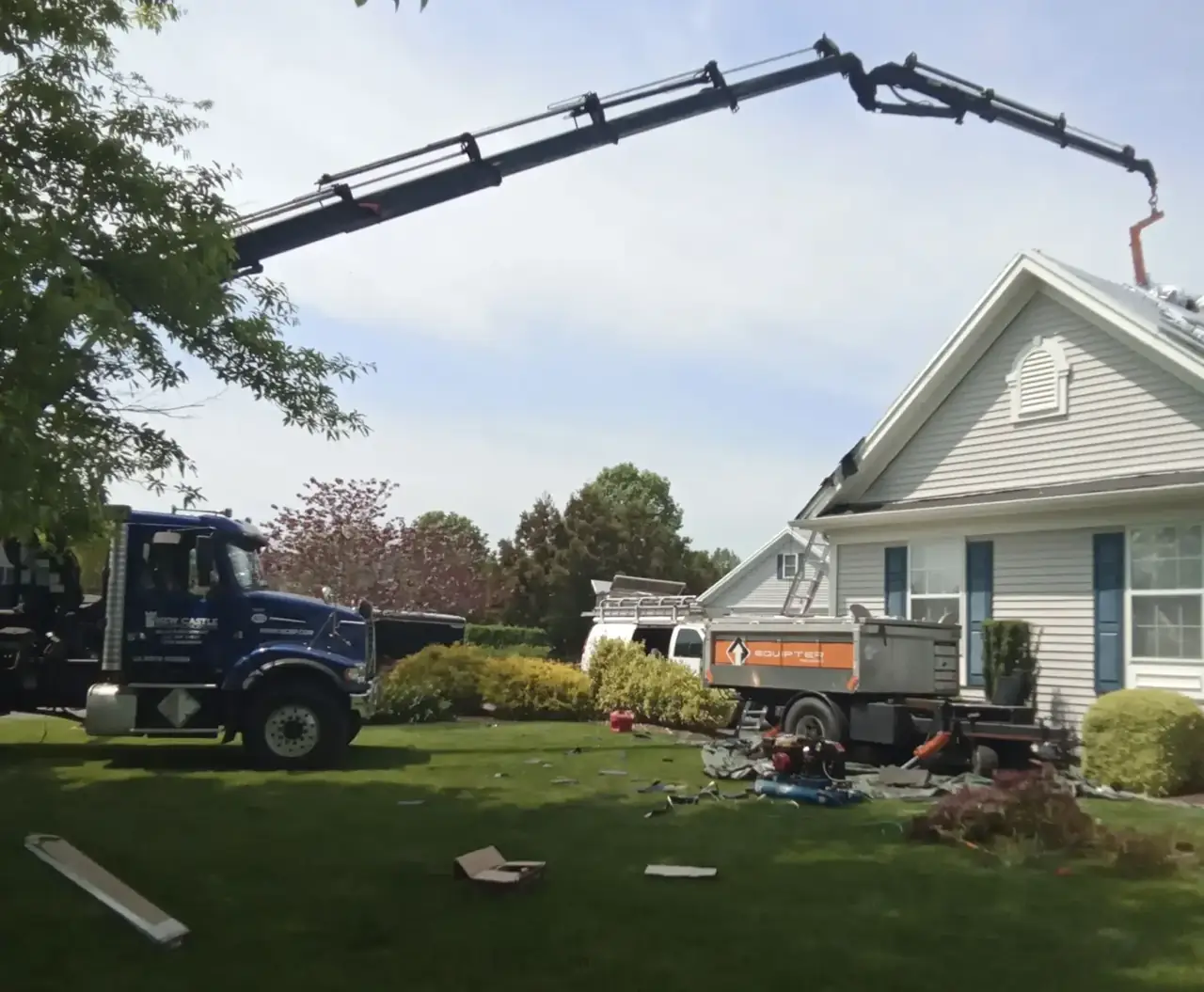
Nor'easters cause a different kind of leak: wind-driven rain forced sideways under loose tabs and around flashing. Blown-off shingles after a windy night, or a limb through the roof from one of the township's big street trees, fall under our storm damage repair work. We photograph the damage and can meet your adjuster on site.
Fix it or replace it: an honest answer for your house
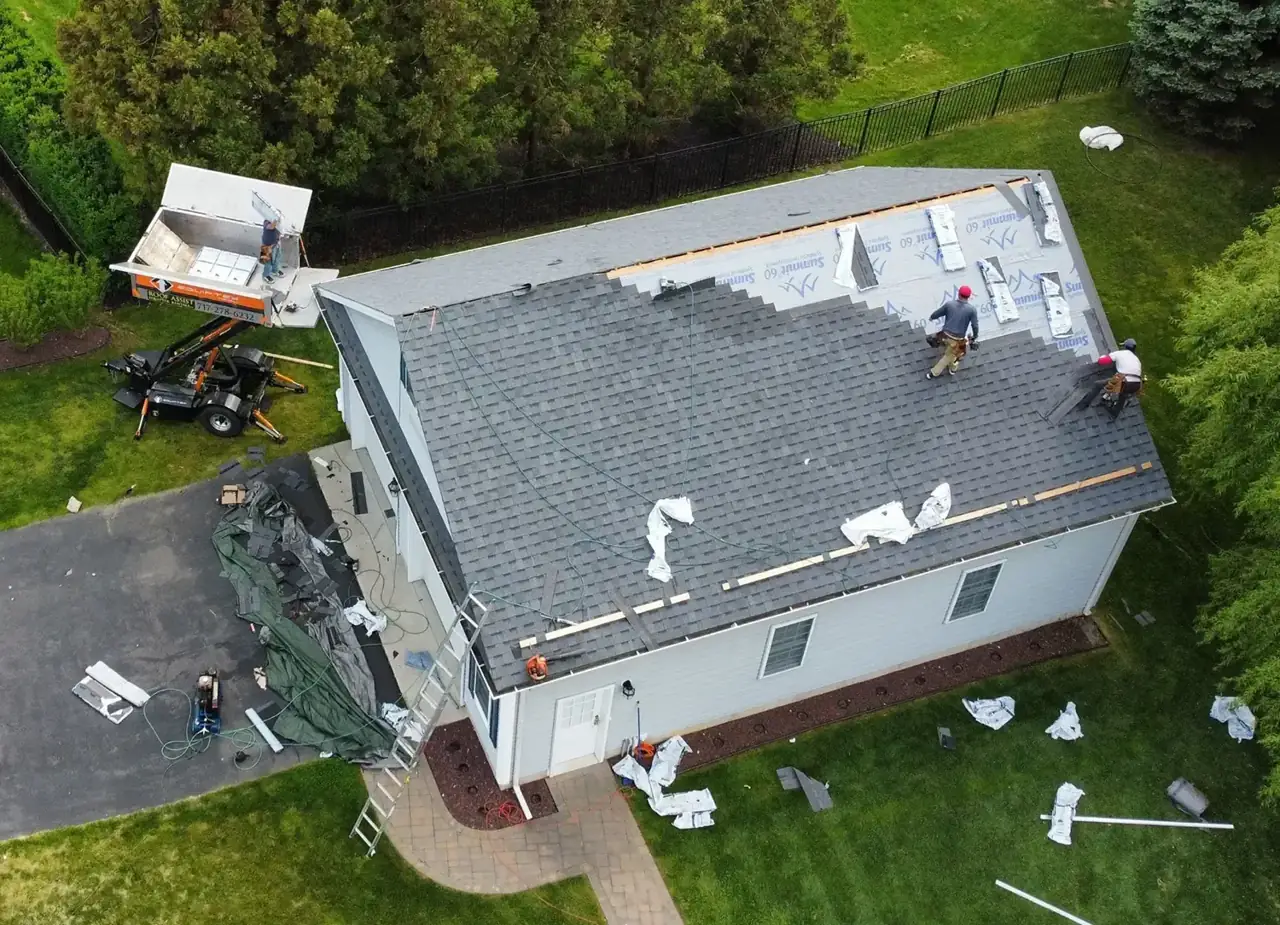
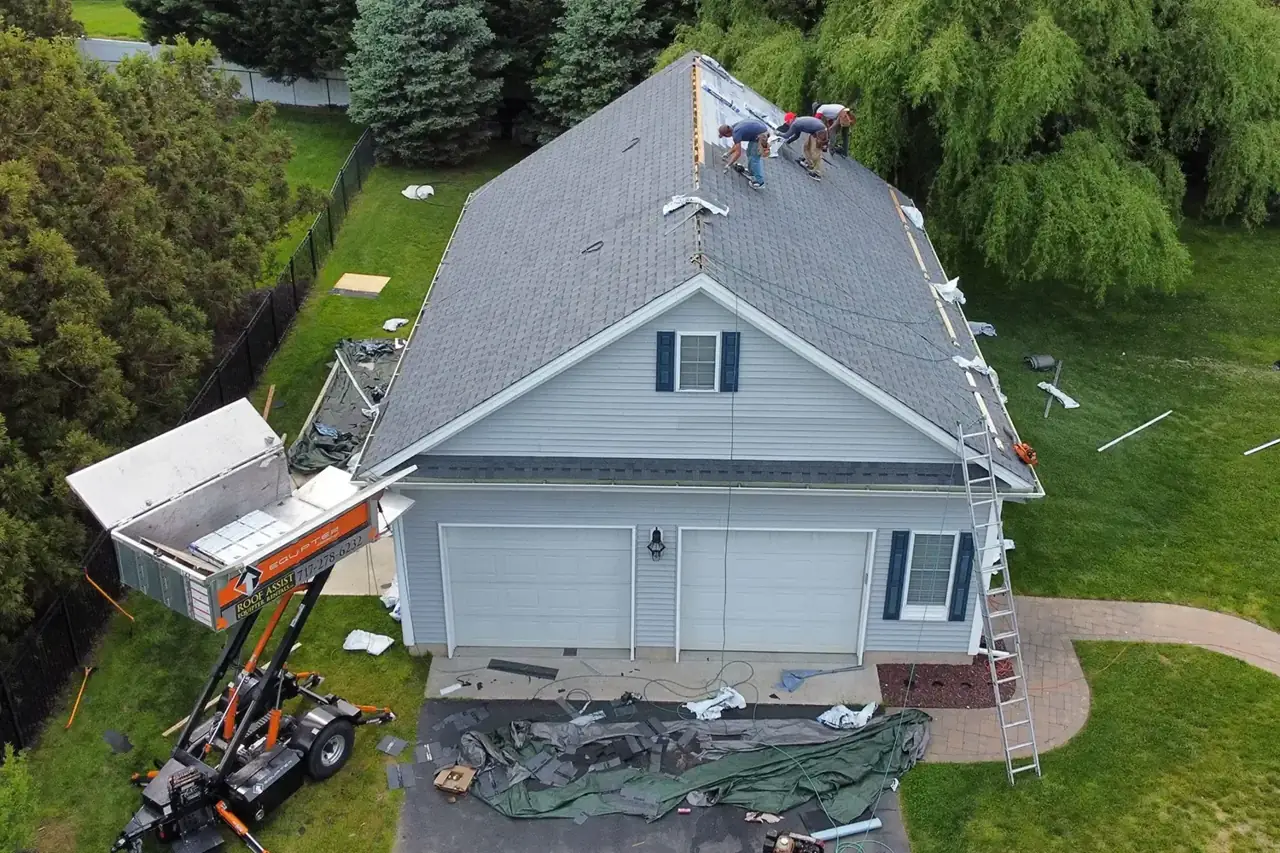
A lot of Hamilton roofs are on their second or third set of shingles, so the question comes up constantly. Our rule of thumb is simple. If the roof has life left and the problem is in one place, a pipe boot, a stretch of flashing or a few shingles, we repair it and tell you what to watch. If the shingles are curling and shedding granules across whole slopes, or we're chasing the third leak in two years, we'll show you the photos and say that a roof replacement is the better use of your money.
Permits rarely come into it for a repair. Hamilton's Division of Inspections no longer requires roofing permits for single-family homes, and a small repair is routine maintenance. The exceptions to know are attached homes, like the twins and townhouses near the Trenton line, and any job where the roof sheathing has to be fully replaced. If a repair grows into either one, we pull the permit before going further.
Read more about how our roof repair service works. Want to know what a full replacement would run before you decide? Try the Instant Roof Quote, then have us look at the leak for free.
More detail on how we handle this work anywhere we serve: Roof Repair. Everything we do in Hamilton: roofing in Hamilton, NJ.