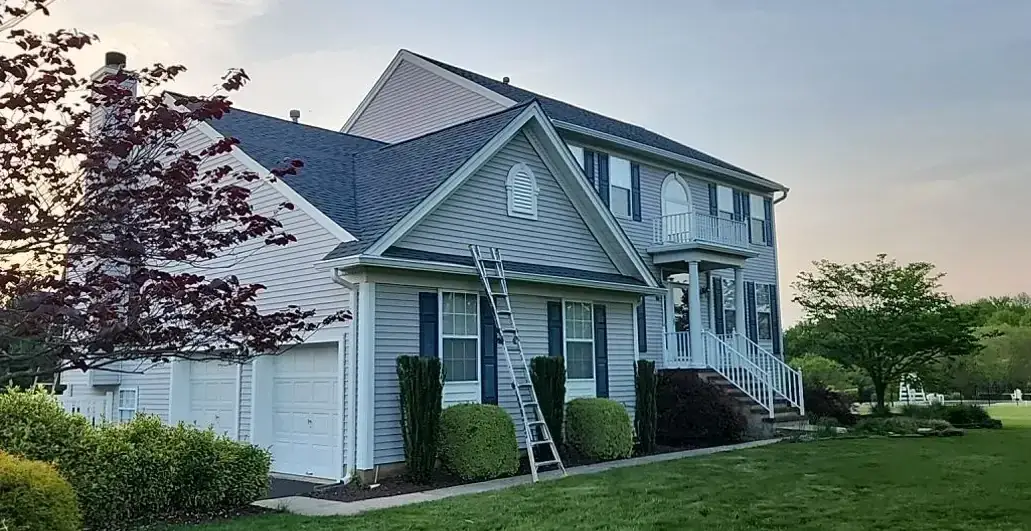

Old houses leak at the details
On an older Princeton house, the open field of shingles is rarely the problem. The leak almost always starts where the roof changes direction or meets something else:
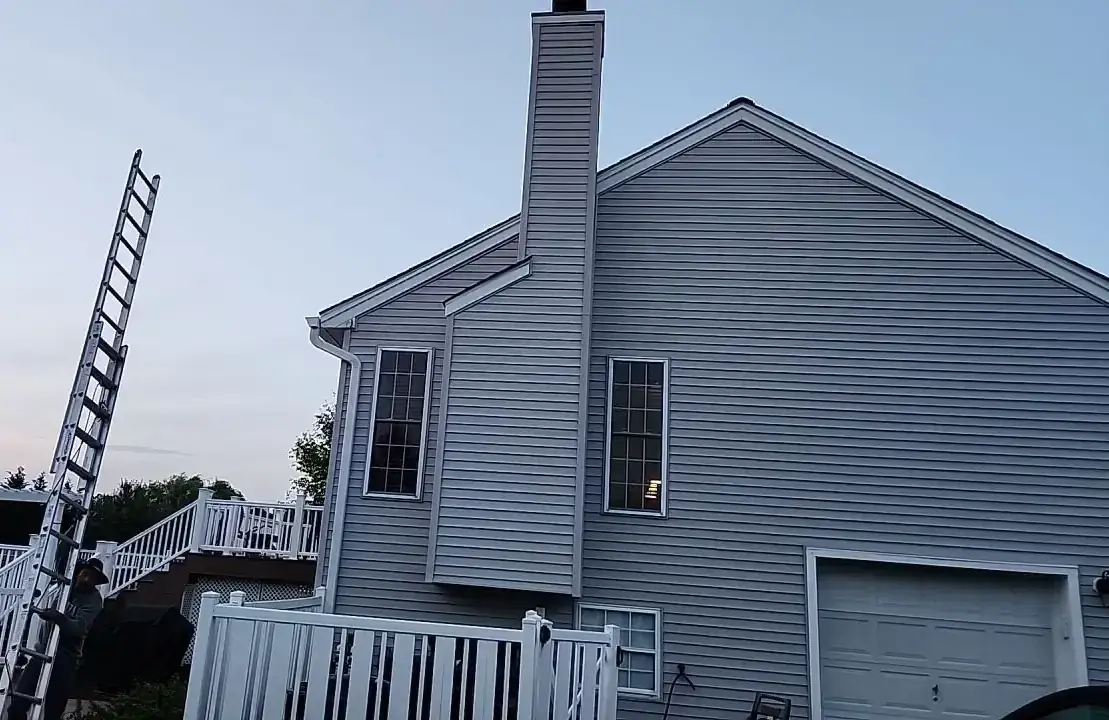
- Chimneys. Many older homes have more than one, and each is a ring of step flashing and counter-flashing set into mortar. When the mortar weakens, the flashing lets go.
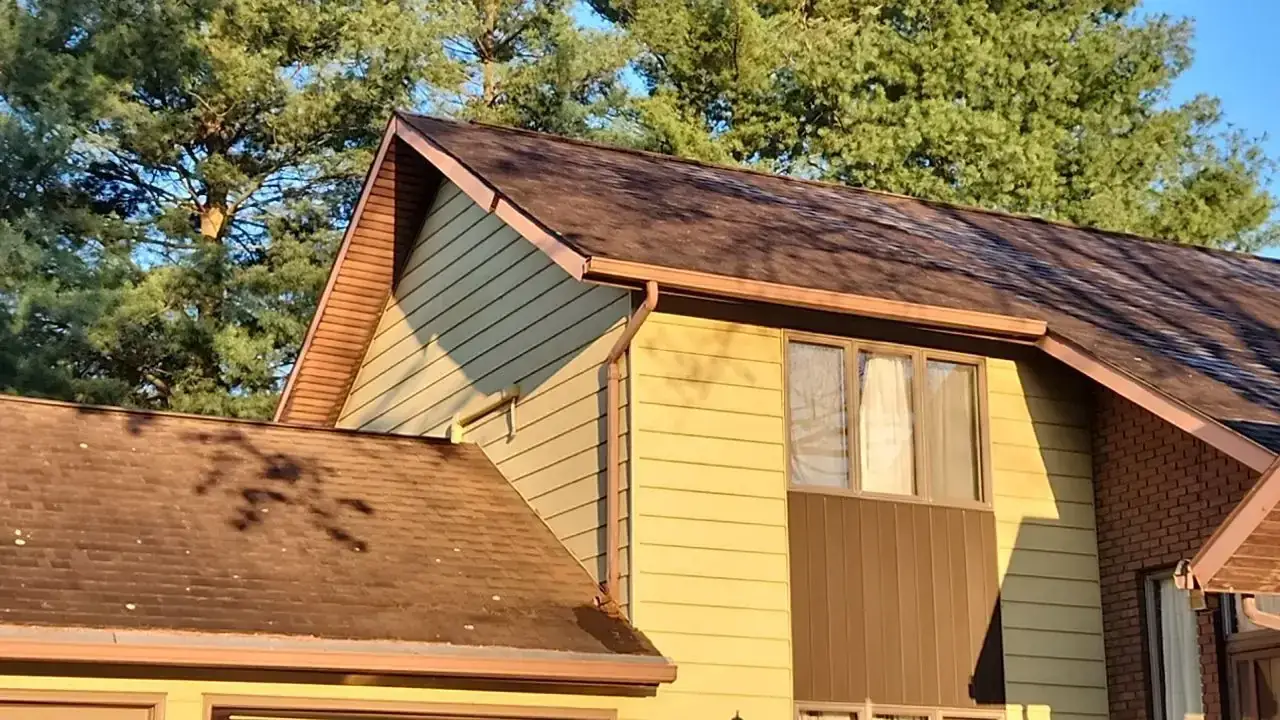
- Dormer walls and cheeks, where short runs of step flashing have been sealed and resealed over the decades.
- Valleys under the trees. Leaves and needles pile up in the valley, hold water against the shingles and wear them out long before the rest of the roof.
- Old repairs. Smears of roof cement and mismatched patches tend to fail after a few winters.
- Transitions between a shingle roof and a copper, slate or low-slope section.
We trace the leak from the stain back to its source, in the attic where we can reach it, and photograph each step so you can see exactly what failed. A repair that doesn't address the real source only moves the stain.
Ice dams and storms on a wooded town
Older attics in Princeton often have little soffit intake and no ridge vent, and the insulation may be thin or uneven. After a snowfall, heat from the house melts the snow higher up the roof, and the water refreezes at the cold eaves. The ice holds back meltwater, which works under the shingles and shows up as a stain along an exterior wall or around a window. Central Jersey winters cross the freezing line often, so this can happen several times in one season.
The repair is to replace the damaged shingles and underlayment at the eaves, with ice and water barrier underneath. The longer-term fix is better attic ventilation and air sealing, so the roof deck stays cold.
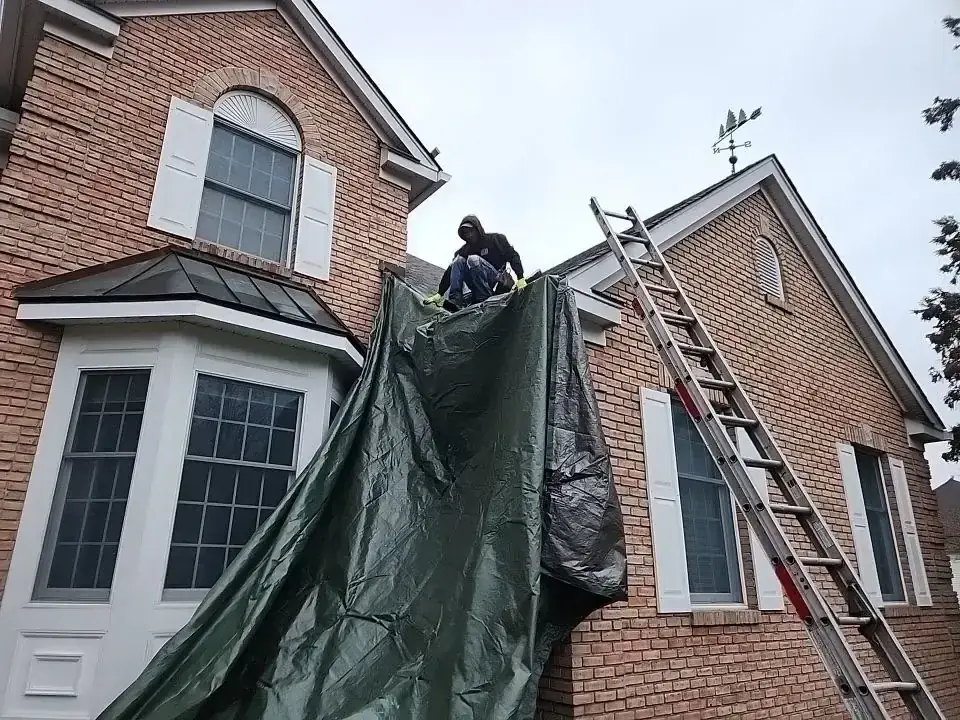
Storms bring a different problem. Princeton's canopy means limbs over many roofs, and a nor'easter or summer thunderstorm can bring one down. After a limb strike or wind damage, we inspect the damaged area and make the permanent repair. Our storm damage work includes photos of the damage, and we can meet your adjuster on site.
Repairs in the historic districts, and knowing when to stop
Princeton's guidance says ordinary maintenance, meaning replacing a deteriorated feature with the same material, color and dimensions, doesn't need a preservation plan. Most roof repairs fit that description: new flashing where old flashing failed, and matching shingles where damaged ones came off. If a repair would change the look of the roof, like a new material or a noticeably different color, confirm with the Historic Preservation Office first. We'll help you with photos and product details. Construction permits generally aren't needed for this kind of repair on a detached home, and if one is, we pull it through the Department of Building & Construction.
We repair asphalt shingle roofs, EPDM flat sections and the flashing that ties them together. If the leak is in a slate or other specialty roof outside our shingle and EPDM work, we'll tell you upfront and still give you an honest read of what we see.
Sometimes the honest answer is that the roof has run its course. If the shingles are brittle across every slope, or each repair turns up two more problems, we'll show you the photos and explain what a roof replacement would involve. Until then, a careful roof repair is often the right call. For a starting number on a full replacement, try the Instant Roof Quote.
More detail on how we handle this work anywhere we serve: Roof Repair. Everything we do in Princeton: roofing in Princeton, NJ.