
Why Scranton houses are hard on gutters
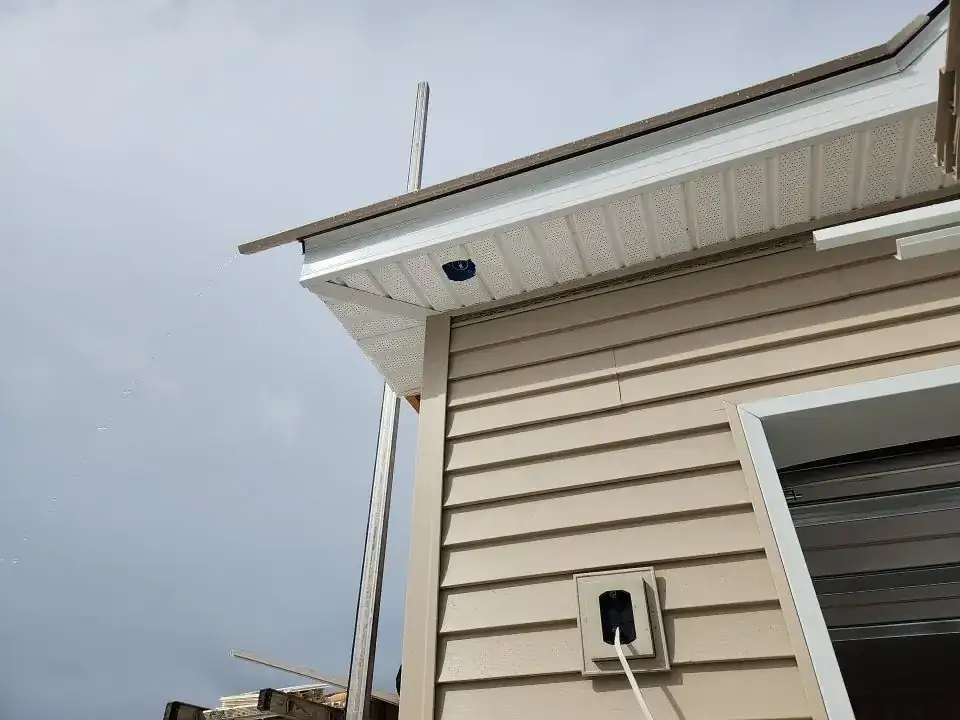
A steep roof moves a lot of water fast. The tall two-and-a-half-story houses in Green Ridge and the Hill Section have big, steep main roofs, and in a summer downpour that water hits the gutter with enough speed to jump right over the front lip. Undersized gutters and a single downspout at the far corner can't keep up, so the overflow runs down the siding and pools along the foundation.
The mature trees on Scranton's hillsides make it worse. Leaves and seed pods fill the troughs every fall, and a clogged gutter in December is where an ice dam starts. The meltwater has nowhere to go, it freezes at the roof edge, and the next thaw backs it up under the shingles. Ice also adds serious weight. Old gutters hung with spikes pull away from the fascia after a few winters of that, and the pitch goes wrong.
Then there's the housing. Many older Scranton homes have gutters that were patched together in short sections over the years, with a leak at every joint and fascia boards rotting behind them. On a double-block, one half often has new gutters while the other half has old ones, and the water from both roofs meets at the party wall.
What we install on a Scranton home
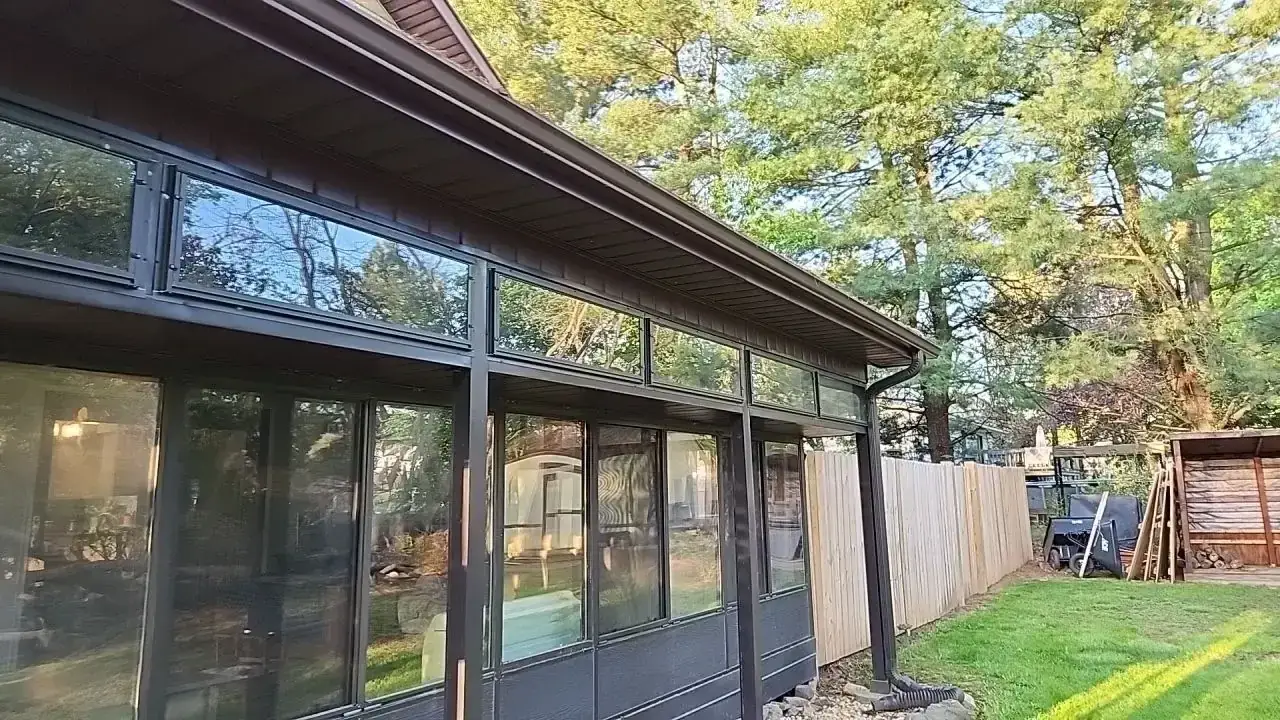
We install seamless gutters, formed in continuous lengths to fit the house, so the only joints are at the corners and the downspout outlets. Fewer seams means fewer drips over your front steps. Before anything goes up, we:
- Measure the roof areas that drain into each run. Steep, tall roofs often call for 6-inch gutters and larger downspouts rather than the 5-inch size common on smaller homes.
- Check the fascia. Gutters are only as solid as the board behind them, and rotted fascia gets replaced first.
- Set the pitch toward each downspout so water doesn't sit and freeze in the trough.
- Use hidden hangers spaced to carry winter ice and snow load, not the old spike-and-ferrule style.
- Place downspouts where the water actually collects, and extend the discharge away from the foundation. That matters on hillside lots where runoff wants to run back toward the house.
On a double-block, we can do your half and finish the run cleanly at the party wall. Where a back kitchen or porch sits below the main roof, we make sure the upper downspout isn't dumping onto the lower roof in one spot, because that's a common source of leaks on low-slope additions.
Pairing gutters with roof work, and permits
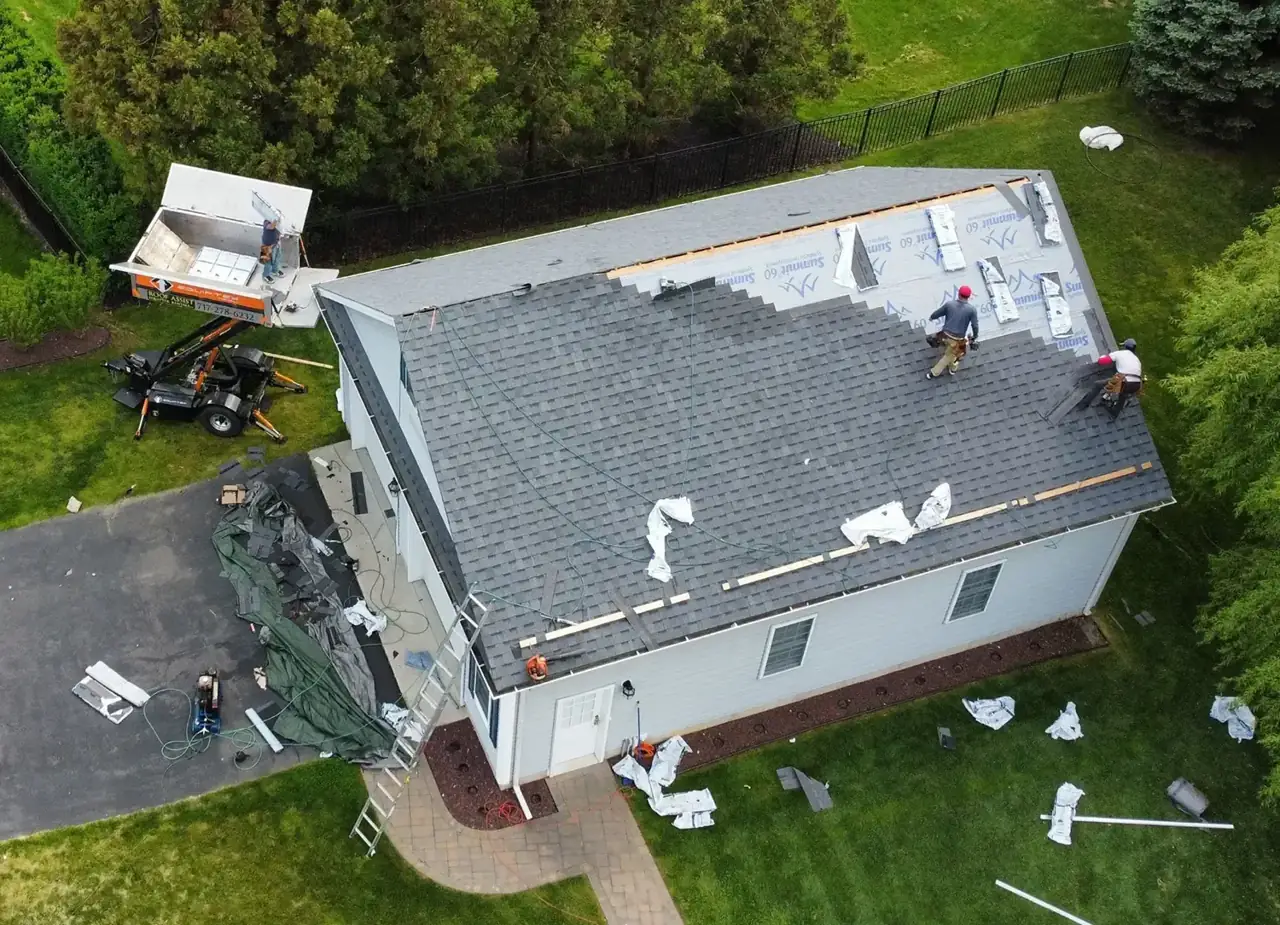
Gutters and the roof edge work as a team. Drip edge sends water into the gutter, and the gutter carries it away. If your roof is near the end of its life, it's worth doing the gutters during a roof replacement so the drip edge and gutters are set together. If the trees over your house fill the gutters every fall, ask about gutter guards at the same time.
Scranton's city permit page takes a broad view: it says every construction project in the city needs a permit. For gutter work, we check with the city's code enforcement office based on the scope and pull a permit if one is needed. When gutters are part of a roofing job, they're handled along with that project.
A new gutter system is also a good moment to look at the trim. Water that has been spilling over old gutters often leaves soft fascia and stained siding behind, and we'd rather point that out now than cover it with new aluminum.
See our gutter installation page for materials and profiles. Weighing a new roof at the same time? The Instant Roof Quote gives you a starting number.
More detail on how we handle this work anywhere we serve: Gutter Installation. Everything we do in Scranton: roofing in Scranton, PA.